Product research · Concept only
Good light.
Made to last.
Repairable holiday lights, wall lights, and accents. One open-source platform to control them, built by the people who use them.
Explore the concepts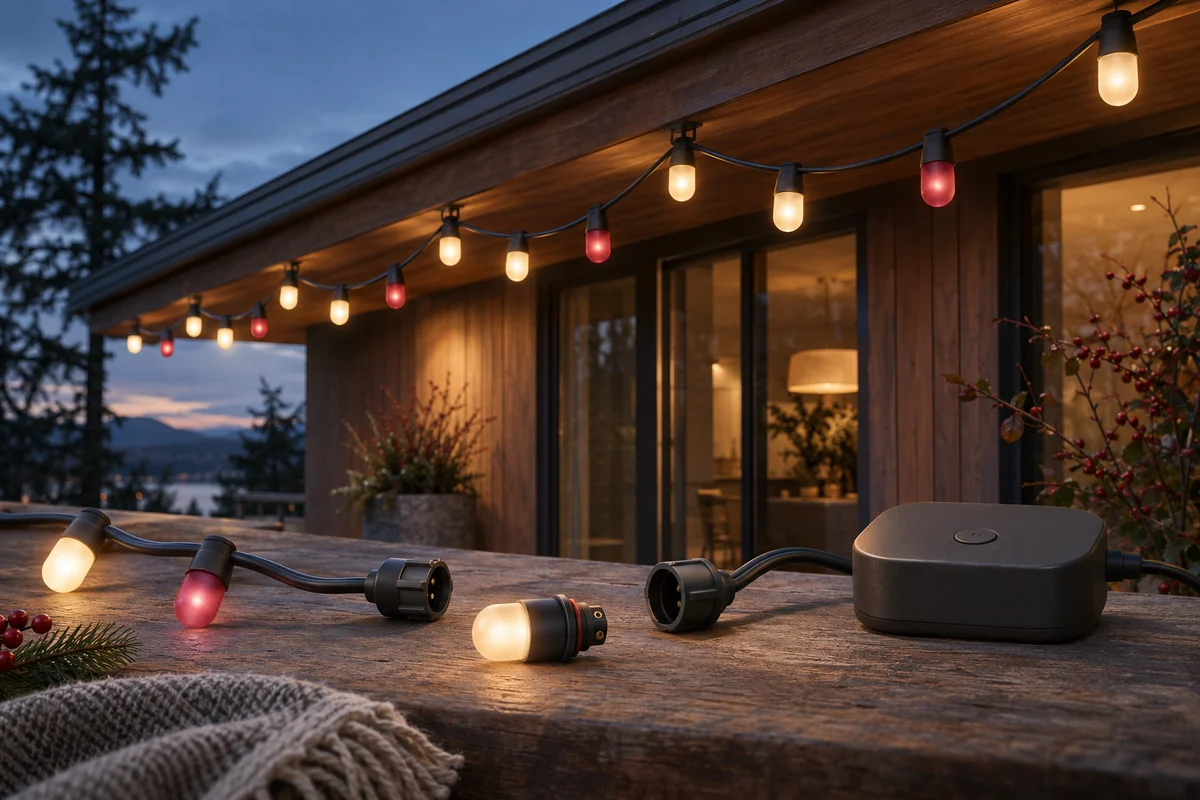
01 / The lighting line
From the holidays to every day.
Holiday strings first
Start with one modular string and a physical on/off button. The design goal is to replace a failed lamp module, cord segment, controller, or power unit without buying another kit.
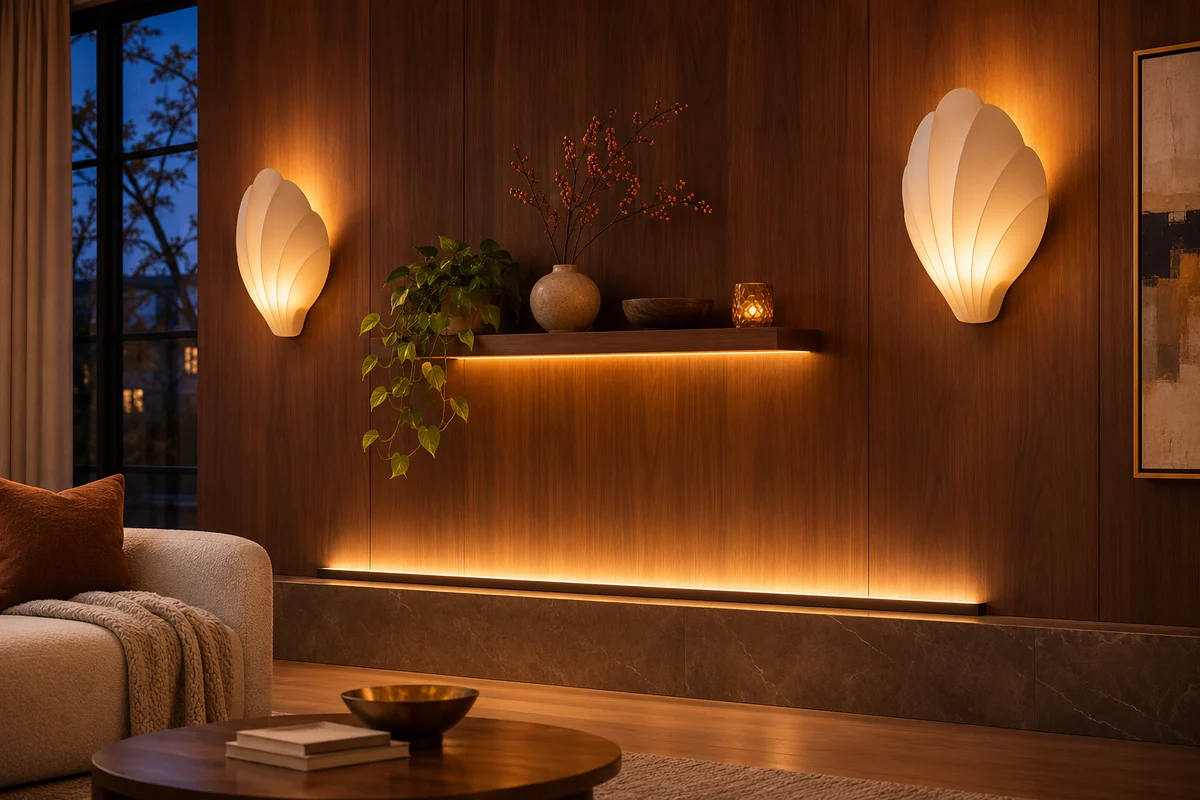
Wall and accent lights next
Explore wall washes, sconces, and shelf accents with replaceable light modules and diffusers. Start with low-voltage plug-in concepts before considering hardwired products.
02 / The control platform
Lightwell: one app for every light.
Lightwell is an independent, open-source home automation project in development. The first release would pair, group, and schedule this lighting line in one app. Scenes and schedules are designed to run locally; physical controls still work when the internet is down. No manufacturer cloud account for basic lighting.
Open at the boundary. Target Matter on/off, brightness, and color on the connected controllers. Advanced patterns can live in a shared local app first. Support varies by controller and feature, so publish what was actually tested rather than promising every effect works everywhere.
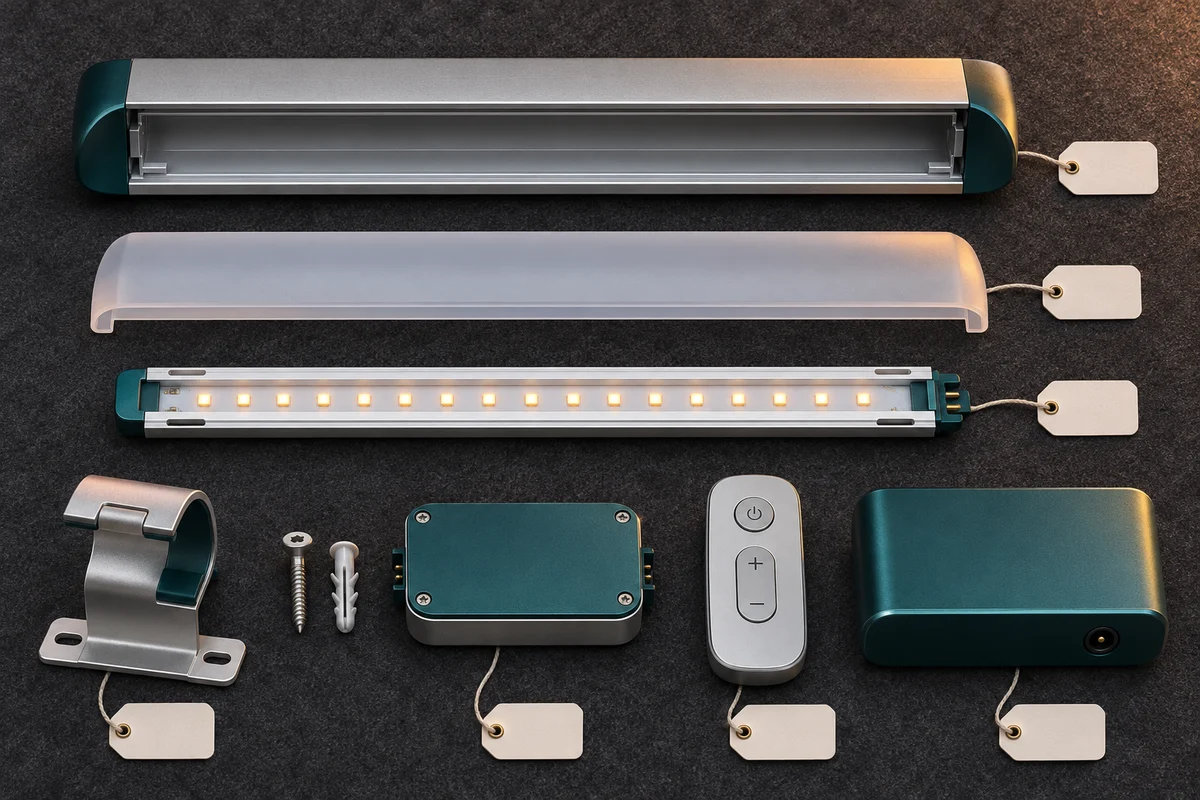
03 / Replace a part
Keep the lights you already have.
Publish editable hardware files, firmware source, a compatibility chart, and illustrated repair guides. Plan a parts page that lists each supported replacement separately by model and revision. No proprietary kit should be required to replace an approved part.
Matter covers smart-home communication, not physical plugs or electrical compatibility. Parts still need the right connector, rating, and revision. Nothing is for sale yet.
04 / Build in the open
What we test first.
- Prove one repair. Swap a failed module in a supervised prototype and record what happens to the rest of the string.
- Prove one scene. Pair two test lights, schedule a scene, cut internet access, and confirm the local controls still work.
- Verify before release. Independent electrical and enclosure testing, then applicable Matter certification. No outdoor, safety, certification, or availability claims until verified.
References: Matter FAQ · Matter certification · Seasonal light safety